Bamboo Viscose Bedding for Hot Flushes & Clean Sleep
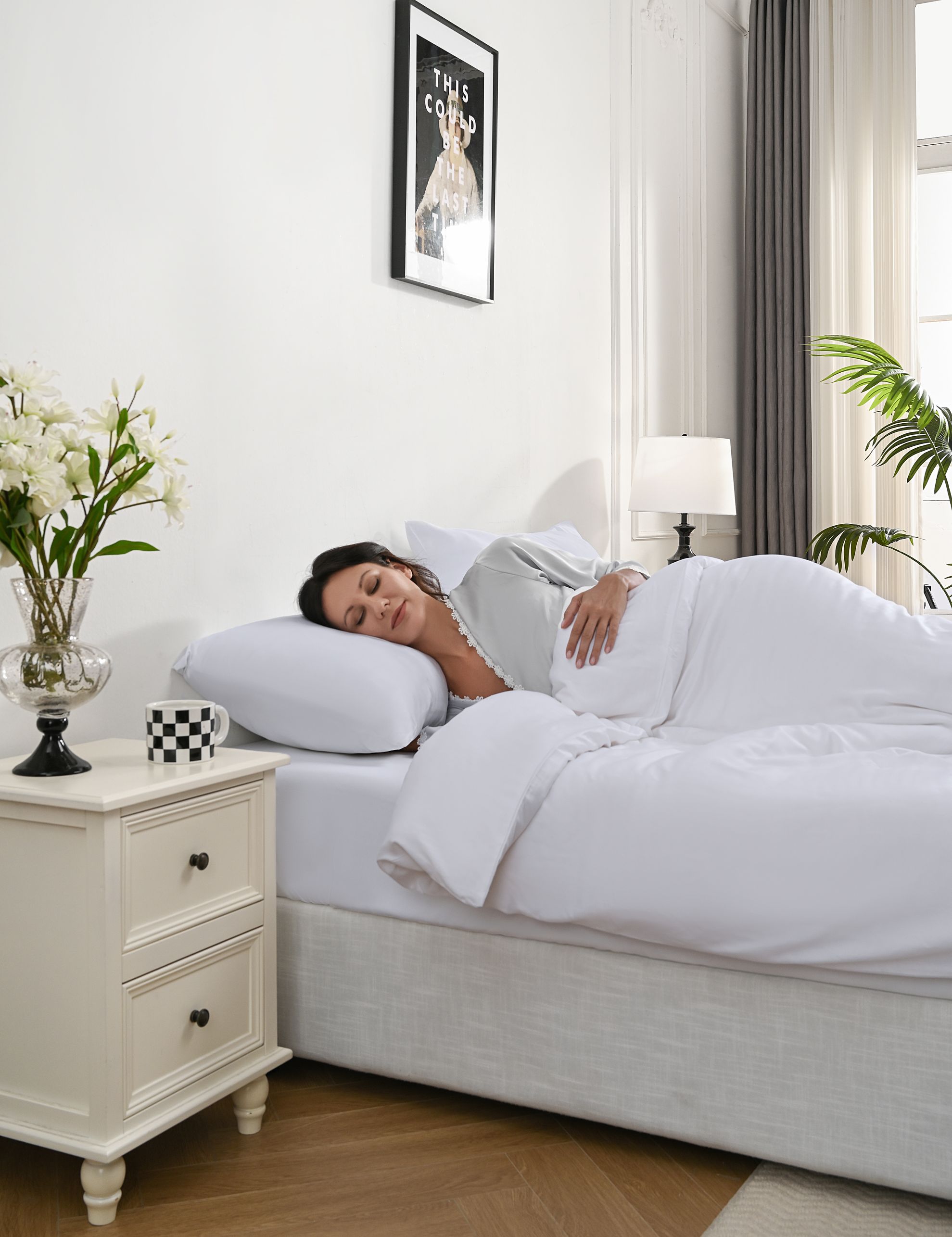
It is 2:00 AM. The bedroom air feels cool, yet a sudden wave of heat washes over you, leaving your neck and back damp with sweat. Ten minutes later, after kicking off the duvet, you are shivering against cold, clammy sheets. For many women navigating perimenopause and menopause, this cycle is an exhausting nightly reality.
While bedding cannot stop hormonal temperature spikes, it directly shapes what happens in the minutes after a hot flush passes—whether you stay trapped in damp, chilled fabric or quickly return to a dry, balanced sleep microclimate.
When your skin is flushed, sensitive, and spending eight hours in direct contact with your sheets and duvet cover, two things matter equally: how well the fabric manages heat and moisture, and how cleanly that fabric is made.
1. Why Woven Bamboo Viscose Eases Night Sweats & Skin Sensitivity
Many shoppers instinctively reach for high-thread-count cotton when upgrading their bedding. During night sweats, however, densely woven conventional cotton often traps heat and holds moisture near the skin, turning heavy and cold once sweat cools down. Woven bamboo viscose works differently on a physical level:
Fast Moisture Wicking & Evaporation Bamboo viscose fibers have a micro-porous structure that pulls perspiration away from the skin and releases it into the air quickly, shortening the uncomfortable window between sweating and feeling chilled.
Balanced Cool-to-the-Touch Relief With higher thermal conductivity than standard polyester and conventional cotton, bamboo viscose feels naturally cool when you first slip into bed. It helps excess body heat disperse during a sudden flush without creating a stifling, trapped-heat cocoon afterward.
Ultra-Smooth Comfort for Thinner, Reactive Skin Declining estrogen often leaves skin drier and more easily irritated. Smooth, fluidly draped bamboo viscose—across your fitted sheet, duvet cover, and pillowcases—reduces friction against your face, neck, and shoulders every time you turn over at night.
Simple Sleep Tip: Instead of sleeping under one heavy duvet, try layering—pair a breathable bamboo viscose fitted sheet and duvet cover with a lightweight throw blanket. When a hot flush hits, you can peel back one layer without waking up freezing ten minutes later.
2. Why "How It's Made" Matters When You Sleep in It Every Night
When you are dealing with night sweats and sensitive skin, open pores and prolonged skin contact make fabric purity just as important as breathability. Naturally, many health-conscious shoppers ask a fair question: How is bamboo actually turned into soft bedding, and is the process truly clean?
In textile science, silky bamboo bedding is bamboo viscose, a Man-Made Cellulosic Fiber (MMCF). While the raw material starts as fast-growing bamboo pulp, transforming rigid bamboo stalks into spinnable yarn requires chemical dissolution and wet spinning.
Historically, legacy viscose factories relied on open chemical processes with high water usage and sulfur emissions. Today, however, responsible textile engineering has transformed how high-grade bamboo viscose is produced—turning clean manufacturing into something you can both verify and feel confident sleeping on.
3. Behind the Fabric: Three Standards That Guarantee Clean, Responsible Production
True peace of mind comes from auditable standards rather than vague buzzwords. Across our supply chain, our partner mills operate under three strict international frameworks that protect your skin, the environment, and the people who make your bedding:
EU-BAT (European Union Best Available Techniques) Clean Processing Our manufacturing partners follow strict EU-BAT environmental benchmarks, using closed-loop chemical recovery and advanced wastewater purification. This drastically cuts sulfur emissions and water waste while ensuring cleaner processing from the very beginning of fiber production.
OEKO-TEX® STeP Certified Sustainable Facilities While basic labels only test a small piece of finished fabric, OEKO-TEX® STeP (Sustainable Textile & Leather Production) audits the entire factory across chemical management, environmental performance, energy efficiency, and workplace safety—guaranteeing transparent, low-impact manufacturing at every stage.
BSCI Audited Ethical Manufacturing Caring for your well-being at home shouldn't come at the expense of the people making your textiles. Our production partners undergo BSCI (amfori Business Social Compliance Initiative) audits to ensure safe working conditions, fair compensation, and ethical labor standards.
4. Three Simple Checks Before Buying Bamboo Bedding
Whether you are replacing a fitted sheet, refreshing your pillowcases, or investing in a full duvet cover set, look for three concrete signs of quality:
Honest Fiber Labeling: Look for clear composition labels stating 100% Viscose from Bamboo, rather than vague or exaggerated claims.
Verified Skin-Safety Certification: Choose bedding certified under OEKO-TEX® Standard 100, confirming the finished fabric is tested free from harmful levels of regulated substances.
Audited Mill Credentials: Look for brands backed by EU-BAT environmental compliance, OEKO-TEX® STeP facility certification, and BSCI social audits.
Good sleep during menopause isn't about finding a miracle cure—it's about removing every unnecessary friction from your night. Breathable, moisture-wicking bamboo viscose crafted under clean, accountable standards lets your body cool down faster, rest deeper, and wake up feeling genuinely restored.